
What to do with your trees after an ice storm
Ice storms hit Broken Arrow trees hard. Here is how to stay safe, sort out what is dangerous, and decide which trees are worth saving.
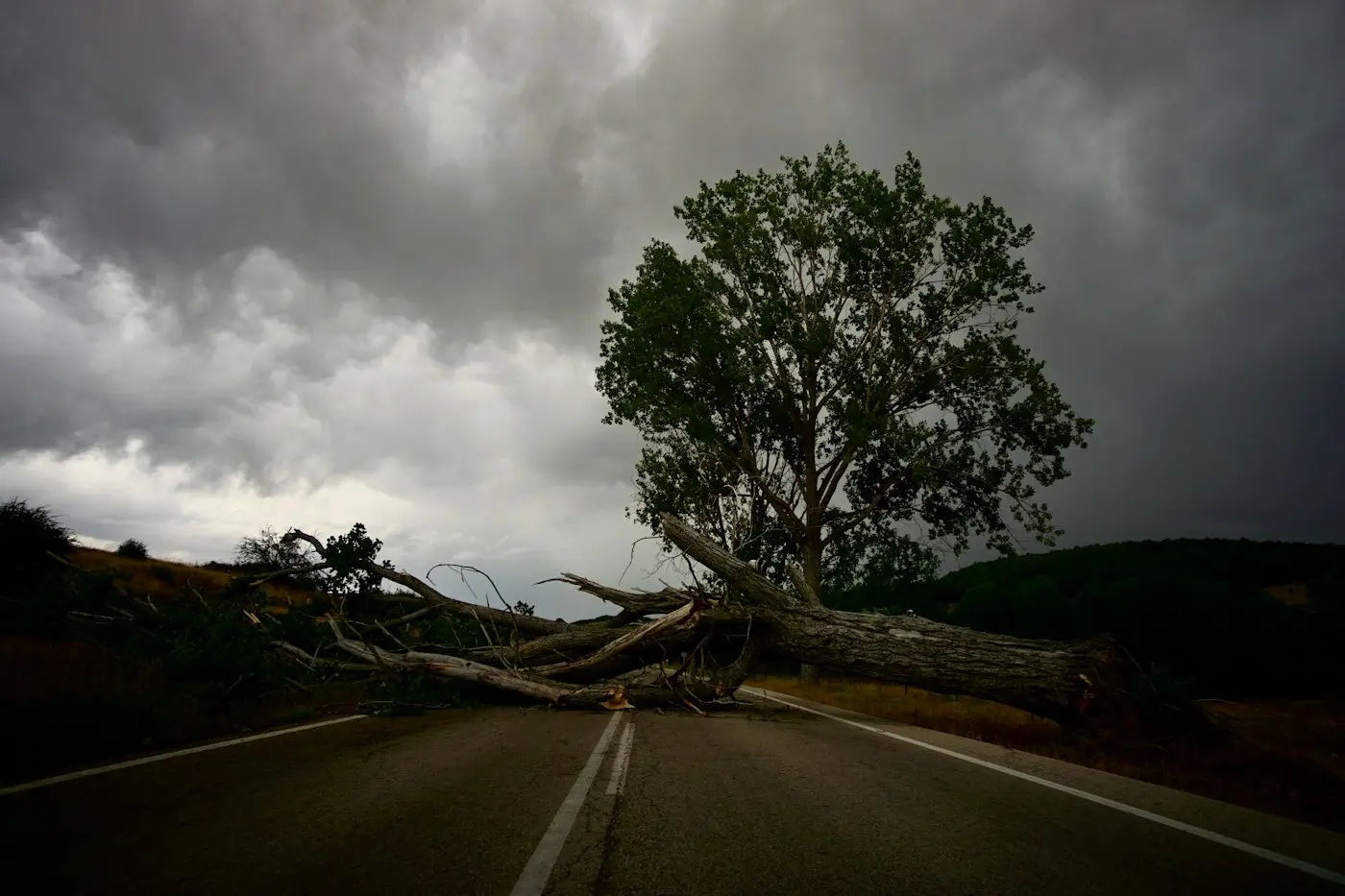
Safety comes first
Broken limbs still hung up in the canopy can drop without warning, especially when the ice starts to melt. Look up before you stand under any tree, and keep kids and pets inside until you know what is hanging.
If you run a chainsaw, wear eye protection, gloves, boots and a hard hat.
Lines down: stay away and call the utility
Treat every downed or sagging line as live. Do not touch it, do not touch a limb that is touching it, and do not try to pull branches off it. Call your electric utility. For most Broken Arrow homes that is PSO, Public Service Company of Oklahoma.
Watch for limbs that are bent down onto a line by the weight of the ice. When the ice melts, those limbs can spring back up and snap the line. Report them to the utility too, and stay out from under them.
PSO handles trees in the lines running pole to pole. Trees on the line from the pole to your house, the service drop, are the owner's responsibility, and work near it should wait until the utility disconnects it.
Hangers and broken tops
A hanger, sometimes called a widowmaker, is a broken limb caught in the tree above you. They can look stable and still let go. If the hanger is over a roof, driveway, walkway or play area, rope that area off and have it taken down from above with the right gear. See emergency storm damage.
Limbs that bend under ice but do not break are a different story. Leave them alone. Knocking ice off can break buds and do more damage. Young branches usually spring back on their own as the ice melts.
Split leaders and cracked trunks
Under a heavy ice load, the fork where two main stems meet can crack. A crack that runs down into the trunk, or a stem that has peeled away from its partner, means the tree has lost its strength right where it needs it most. That kind of damage often means removal, especially when the tree stands within reach of the house.
Which trees break most
Bradford pear, a type of Callery pear, is one of the trees most likely to split in an Oklahoma ice storm. As it grows it packs many branches into the same spot with narrow angles between them, and those junctions tend to tear apart under ice and wind. Older Bradford pears are the worst. If you have one that came through with major splits, removal is usually the better call. See tree removal.
Can the tree be saved?
A few questions help sort it out:
- Does the tree now look likely to drop a large limb, or fall entirely, in the next storm?
- Has more than about one-third of the branching been broken? If so, removal is usually the better choice.
- Has a large strip of bark been torn from the trunk? Big bark wounds open the tree to decay and wood-boring insects.
- Even if it lives, will it ever look right again?
Most trees with lighter damage recover with new growth in spring. Broken limbs should be cut back cleanly to a healthy side branch, without leaving stubs. Do not top the tree. Topping leaves weak sprouts that break easily in the next storm. Wound paint is not needed. See tree trimming.
Take photos for insurance
Before anything is cut or moved, photograph the damage from several angles. Get the tree, the break and anything it hit. Then check your homeowner policy or call your agent to learn what it covers before work starts.
A free estimate gets the tree looked at in person.
Common questions
Should I knock the ice off my trees?
No. Let the ice melt on its own. Knocking it off can break buds and limbs.
A tree limb is lying on the power line to my house. Can I pull it off?
No. Stay away from the limb and the line, and call your electric utility. Any line, including the one to your house, can be live.
My Bradford pear split down the middle. Can it be saved?
Usually not. A split through the main fork leaves it weak, and Bradford pears tend to keep breaking as they age.
How do I know if a damaged tree is worth keeping?
Check how much canopy is broken, whether the trunk or main fork is cracked, and whether bark is torn away. If more than a third of the branches are gone, removal is usually better.