
Hollow or rotting tree
Some hollow trees stand for decades. Others snap in the next storm. The difference is how much sound wood is left around the hole.
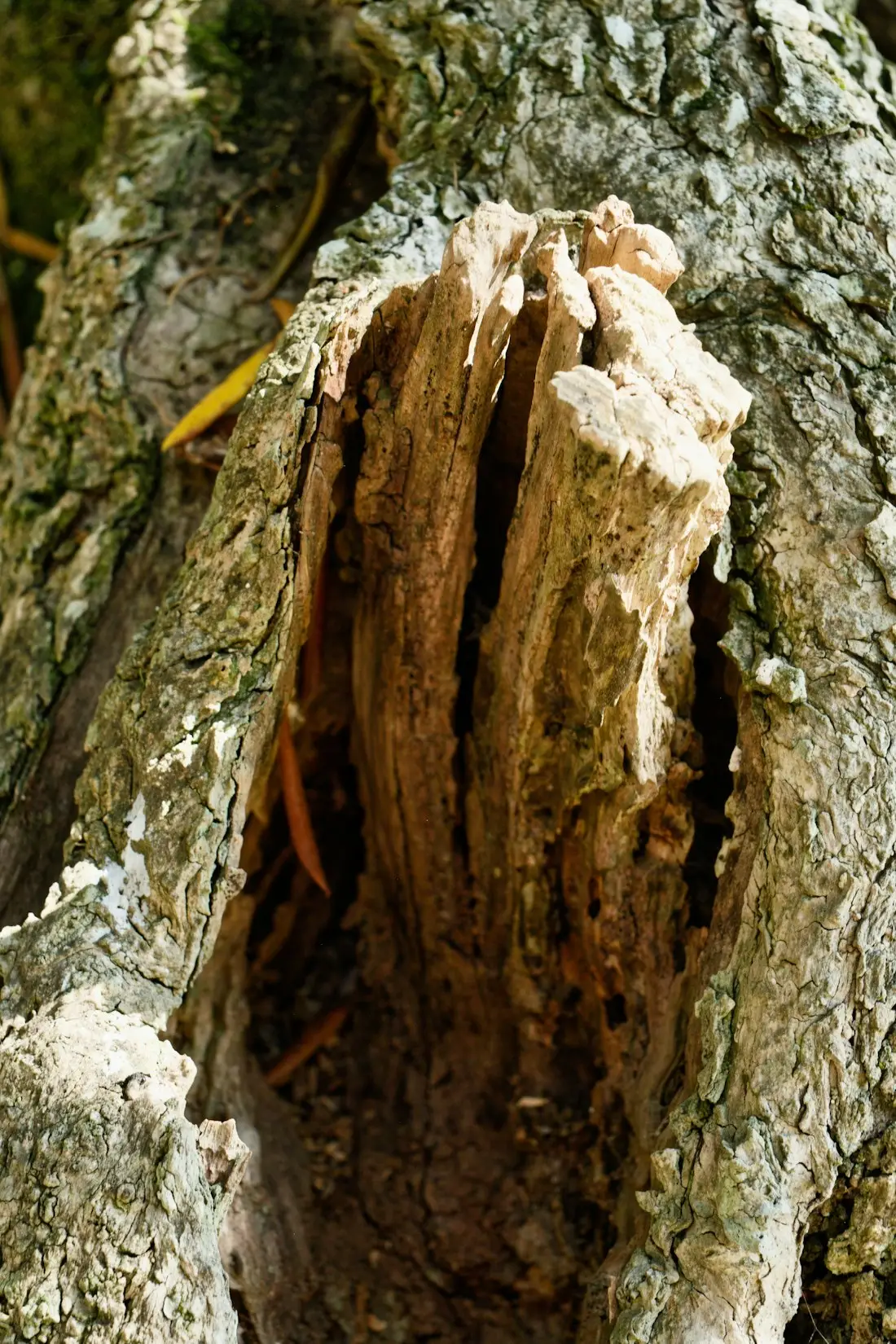
How trees rot
Rot gets into a tree through wounds: broken limbs, bad pruning cuts, lawnmower scars, or damage to the roots. Fungi then break down the wood inside. A tree can stay alive and green while the center of the trunk rots away, because the living part of a tree is the outer layer just under the bark.
When a hollow is dangerous
It's the wall that matters, not the hole. A trunk with a hollow center and a thick shell of sound wood can be strong. A trunk where the rot has eaten most of the way to the bark can snap.
Signs the rot is serious:
- A large opening in the trunk, especially low down.
- Soft, crumbly or wet wood you can push into.
- Shelf fungus or mushrooms on the trunk or base. See mushrooms on a tree.
- Cracks running up or down from the cavity.
- Dead limbs above the cavity.
- A hollow sound when the trunk is tapped.
Can it be saved?
If there's plenty of sound wood around the decay and the tree is otherwise healthy, it can often stay, with any dead or weak limbs above it reduced. If the rot is extensive, low on the trunk or in the roots, and the tree can reach the house, it should come down. Filling a cavity with concrete doesn't make a tree stronger. That's an old practice that's no longer recommended.
Common questions
Can a hollow tree be healthy?
Yes, many hollow trees are alive and leafy. Being alive and being structurally safe are two different things.
Should I fill the hole in my tree?
No. Filling cavities doesn't add strength and can trap moisture. Leave it open and have the tree's structure checked.
How fast does rot spread in a tree?
It varies by tree species and the type of fungus. Some trees wall it off for years. Others decline quickly.