
Dead tree near my house
A dead tree in the back of the lot is one thing. A dead tree that can reach your roof is another. Here's how to think about it.
The simple test
Stand at the base of the tree and look at the house. If the tree is taller than the distance to the house, it can hit it. Lean, wind direction and which limbs are heaviest all change exactly where it would land, but that one comparison tells you if the house is in play.
If it is, and the tree is dead, it belongs at the top of your list.
What usually happens first
Dead trees near houses rarely fall all at once on the first day. More often:
- Dead limbs over the roof drop first, usually in wind or ice. They puncture shingles, crack gutters and break windows.
- The top breaks out, leaving a jagged trunk that keeps shedding pieces.
- Eventually the trunk or roots fail, and the whole tree goes.
Each of those is cheaper to prevent than to repair.
Before the next storm
- Keep people and cars out from under it in wind, ice or snow.
- Don't let kids play under it.
- Take photos of the tree now, so you have a record of its condition.
- Get a removal estimate. See dead tree removal.
How it comes down near a house
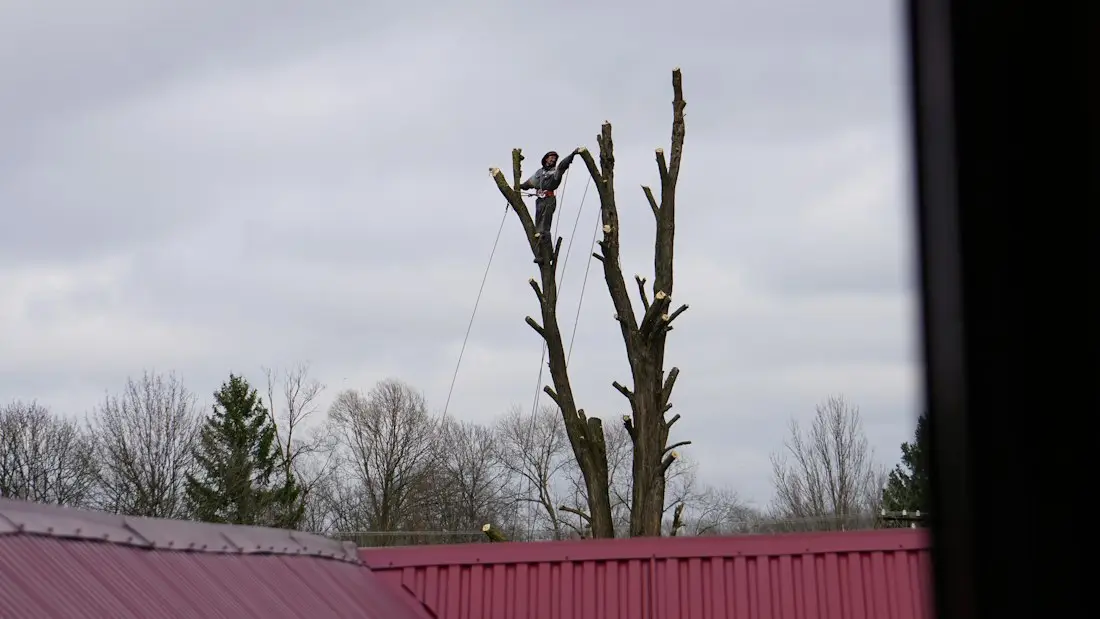
A dead tree next to a house is taken apart from the top down. Every piece over the roof is cut small and lowered on ropes. If the wood is too decayed to climb safely, the work is done from a lift. Nothing gets dropped toward the house.
Common questions
Will insurance pay if my dead tree falls on my house?
Often not easily. Insurers can treat a tree that was clearly dead before it fell as neglected maintenance. Check your policy, and don't count on it.
What if the dead tree is my neighbor's but it's over my house?
See my neighbor's dead tree. Talking to your neighbor first is usually the fastest route.
Is it safe to remove a dead tree myself?
Not one that can reach your house. Dead wood breaks unpredictably, and controlling where it falls takes ropes, equipment and experience.